
Testimony
Two Corn Patches, and the Gardener Each One Had
Same season, same seed, two very different harvests
There are two corn patches in this article and both of them were planted by somebody who meant well. Hold onto that before we go any further, because there is a third kind of gardener who throws seed on the ground and walks away, and his ground is bare and there is nothing to discuss. That is not what we are looking at. Both of these men spent money. Both of them dragged a hose out there at some point during the summer. Both of them are going to harvest something. But one patch is standing twelve feet tall above a six foot fence like a wall of green, and the other is buried in weeds with cobs barely a third filled in. Same town. Same season. Same seed available at the same store.
I have been thinking about testimony all week, and I keep coming back to these two photographs.
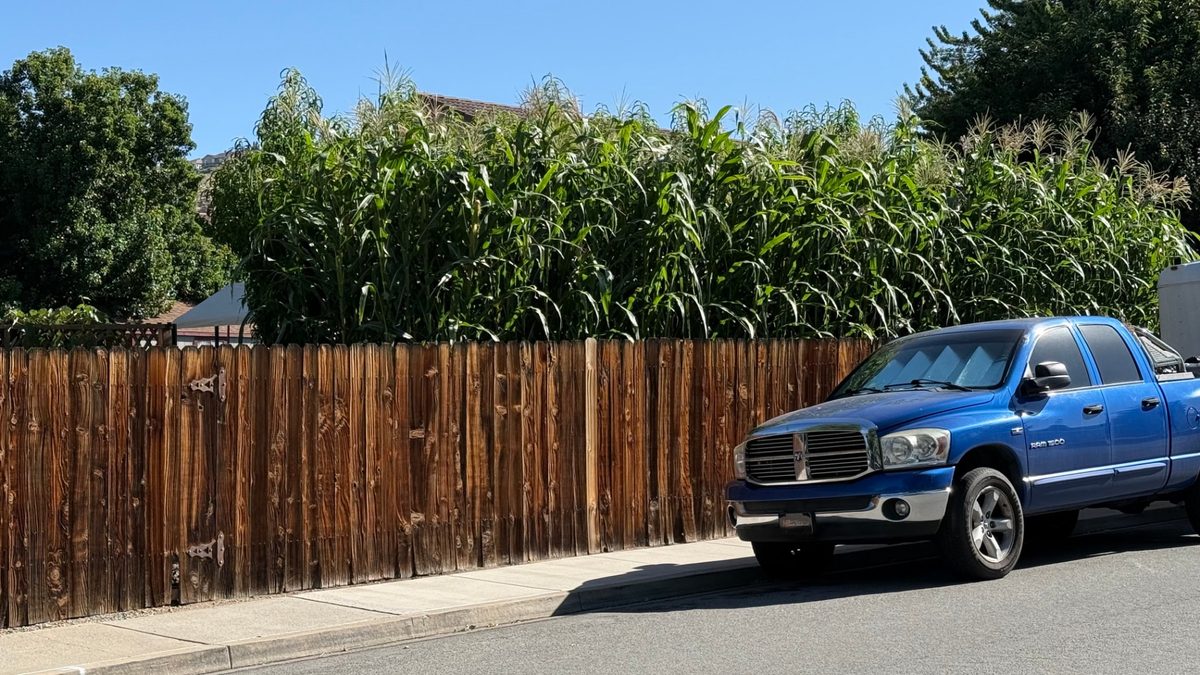
Look at the tall one first. That corn went into the ground the same week the other patch did. The gardener watered it deep and he watered it at the base where the water does some good. He planted it in a block instead of a long thin row, and that single decision matters more than most people realize, because corn is wind pollinated and the pollen has to fall off the tassel of one plant onto the silk of the plant standing right beside it. He kept the weeds down. He watched for pests and dealt with them early, before they had numbers. And now that patch will be filled out to the tip. Alma said the same thing in one sentence, and he was not talking about corn.
“And behold, as the tree beginneth to grow, ye will say: Let us nourish it with great care, that it may get root, that it may grow up, and bring forth fruit unto us. And now behold, if ye nourish it with much care it will get root, and grow up, and bring forth fruit.” (Alma 32:37)
Now look at the other one.
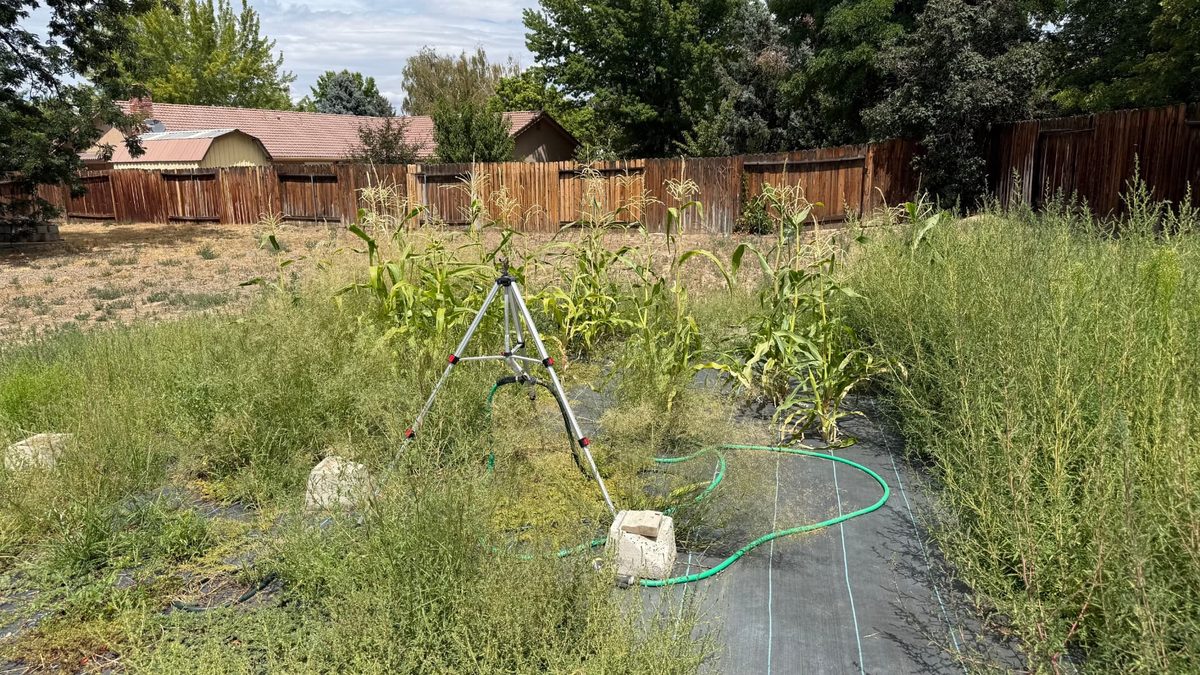
That patch got planted too. Somebody spent the money, laid the ground cover, ran a hose out there and set a sprinkler up on a tripod. That is not nothing. But about half of those plants died early and never came back, and the ones that lived got watered from overhead by a spray head, and overhead spray during tasseling washes the pollen right off the plant before it can ever reach the silk. So the cobs out there are maybe thirty percent pollinated. Pull back a husk and you get a scattering of kernels with bare patches all over it. Nobody weeded any of it. The whole thing stands in a sea of tumbleweed. There will be a harvest of sorts, technically. It will not be worth what it cost.
“But if ye neglect the tree, and take no thought for its nourishment, behold it will not get any root; and when the heat of the sun cometh and scorcheth it, because it hath no root it withers away, and ye pluck it up and cast it out. Now, this is not because the seed was not good, neither is it because the fruit thereof would not be desirable; but it is because your ground is barren, and ye will not nourish the tree, therefore ye cannot have the fruit thereof.” (Alma 32:38–39)
New here? I give away Chapter 8 of my book, the one I get asked about more than any other. It makes the scriptural case that the seven seals haven't opened yet, one of the more provocative claims I make. Join the newsletter and it's yours. Get the Free Chapter →
I have already written at length about whose fault that is and I was not gentle about it, so I am not going to repeat the argument here. If you want the hard version, I laid it out in full when I wrote about why people leave the Church, and the short answer is that you are one hundred percent responsible for your own testimony and always have been. What I want to do in this article is something narrower. I want to walk through what the second gardener actually did wrong, one item at a time, because every one of those mistakes has a name in the gospel and most of us are making at least one of them right now without knowing it.
He Watered the Leaves Instead of the Roots
Overhead spray looks like watering. From the kitchen window it looks exactly like watering. The plants get wet, the ground gets dark, and a person could stand there feeling good about the fifteen minutes he just spent. But the water evaporates off the leaves before it goes anywhere useful, and during the weeks that matter most it destroys the pollination on top of that. All the effort, almost none of the effect.
We do this constantly. Sitting in a meeting is not the same as worshipping. Having the app open is not the same as reading. Being in the building is not the same as partaking. I am not questioning anybody’s sincerity, because the man with the sprinkler was sincere and he was also out there in the heat doing it. But a testimony is fed at the root, in private, where nobody is watching, and everything else is surface water. Having a testimony was never the finish line to begin with, and it certainly is not the same thing as being converted.
He Planted Them Too Far Apart
This is the detail from that garden I cannot get out of my head. A corn plant standing by itself in a yard will grow tall and green and healthy and produce almost nothing, because the pollen has to travel from the tassel of one plant to the silk of the plant beside it, and it only travels a short distance. Space them out and the pollen blows off into the neighbor’s yard. The stalk looks fine. There is nothing to eat.
Moroni recorded how the early Church handled that exact problem, and he was not writing about agriculture either.
“And after they had been received unto baptism, and were wrought upon and cleansed by the power of the Holy Ghost, they were numbered among the people of the church of Christ; and their names were taken, that they might be remembered and nourished by the good word of God, to keep them in the right way, to keep them continually watchful unto prayer, relying alone upon the merits of Christ, who was the author and the finisher of their faith. And the church did meet together oft, to fast and to pray, and to speak one with another concerning the welfare of their souls.” (Moroni 6:4–5)
Their names were taken. They were remembered. They met together often, and they talked to each other about the welfare of their souls, which is a good deal more than passing somebody in the hall. That is a planting plan. And it is the reason your ward matters on the Sundays when you would rather stay home, and the reason a person who quietly stops coming starts producing nothing long before anybody notices the stalk is empty.
He Never Pulled a Single Weed
Nobody plants weeds. That is what makes them weeds. They arrive on their own the moment you stop paying attention and they never announce themselves as enemies of your corn. They are just other things growing. And that is exactly how it happens to us. I have never met one person who sat down and decided to let their testimony go. They got busy. A stretch at work swallowed a season, a calling ended and took its routine with it, a child got sick, and something perfectly reasonable moved into the space where scripture study used to sit. Then something else moved in behind it. None of it looked like rebellion at any point, and the Savior described it precisely without calling it wickedness either.
“He also that received seed among the thorns is he that heareth the word; and the care of this world, and the deceitfulness of riches, choke the word, and he becometh unfruitful.” (Matthew 13:22)
The care of this world. Not the sins of this world. The cares.
So Which Patch Is Yours
Not five years ago. Not the week you came home from your mission. Today. When did you last open the scriptures on a day nobody expected you to? When did you last pray about something that was not a list of requests? Are you meeting together oft, or are you attending? Are you pulling weeds, or have you simply gotten used to how the yard looks? I ask myself those questions and I do not always care for the answers, and I have been reading the Book of Mormon every day for forty years. The audit never stops being necessary. Tall corn does not stay tall on its own either.
And if the answer this morning is that your patch looks like the second photograph, take that as information and not as a verdict. Corn cannot be replanted in September. You can. Weeds can be pulled, water can be moved off the leaves and down where it does some good, and barren ground can be worked until it is no longer barren. The seed is still good. It was always good, and Alma settled that question before he ever brought up the ground.
There Is One More Gardener Here
I have saved Him for last on purpose. In the allegory of the olive tree, the Lord of the vineyard stands in the middle of a failing harvest and asks a question out loud.
“But what could I have done more in my vineyard? Have I slackened mine hand, that I have not nourished it? Nay, I have nourished it, and I have digged about it, and I have pruned it, and I have dunged it; and I have stretched forth mine hand almost all the day long, and the end draweth nigh.” (Jacob 5:47)
He is grieved. He has dug and pruned and fed and stretched out His hand all day long, and He is standing there looking at what came of it. That is our God, and He is no distant observer of your patch. He has been out there working it the whole time, in weather you knew nothing about, on days you were not watching. He will not do your watering for you. But you have never once been out there alone.
One more thing before you go, because there is a piece of this I have not touched. Everything above is about a plant that is struggling to grow. There is another kind of attack entirely, and it does not come for the seedling at all. It waits until the plant is mature and strong and finally producing fruit, and then it arrives in numbers. I found that out the hard way in a tomato garden, and I have written about it in a separate article, because it is coming for this Church sooner than most members think.
I know the seed is good. I have watched it grow in my own life for more than forty years, in seasons where I tended it well and in seasons where I did not, and the difference was never in the seed. In the name of Jesus Christ, amen.
For Further Study
On the Seed and the Tree: Alma 32:27–43; Alma 33:22–23
On the Sower and the Four Soils: Matthew 13:3–8, 18–23; Mark 4:14–20; Luke 8:11–15
On Nourishing One Another: Moroni 6:4–6; Mosiah 18:8–10; D&C 84:106
On Daily Diligence: 2 Nephi 32:3; 3 Nephi 18:18–20; D&C 90:24
On the Lord of the Vineyard: Jacob 5:47–48, 61, 70–75
Keep Reading
Before You Go
Want the full case in one place?
Start with my free chapter, What Seal Are We In?, and I'll send a note whenever I publish something new.
Get the Free ChapterHave a thoughtful question? I read every one. Submit a question →